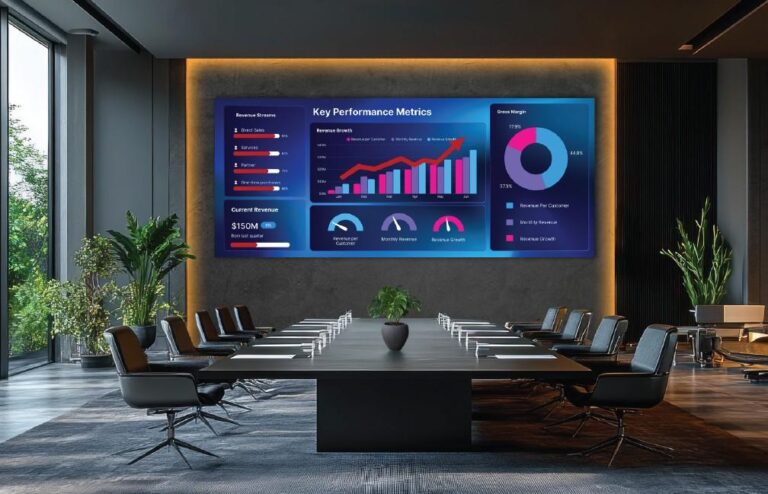
When purchasing an LED display, one of the biggest concerns is simple:
Can the LED screen run reliably for a long time, or will it keep breaking down?
An LED display is usually a long-term investment. For advertising, stadiums, shopping malls, transportation hubs, and other commercial applications, unexpected screen failures can lead to downtime and additional maintenance costs.
So, what determines LED display reliability?
Here are the key factors to consider before buying.
1. Quality of LED Components
The quality of the components directly affects the reliability of an LED display.
Important components include:
- LED lamps
- Driver ICs
- PCB
- Power supplies
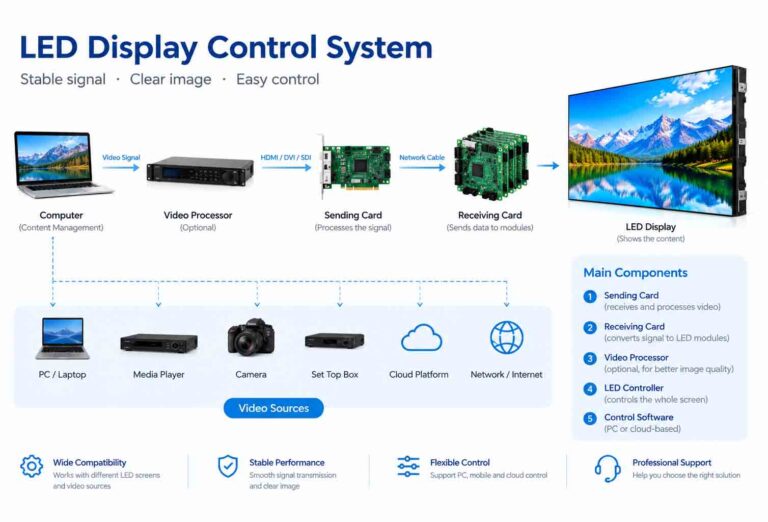
- Receiving cards
- Connectors and cables
A reliable LED display manufacturer should be able to clearly explain the main components used in the screen.
Don’t only ask about the pixel pitch. Ask what is inside the cabinet.
2. Stable Power Supply Is Important
Power supply problems are one of the issues that can affect LED screen stability.
A properly designed LED display should have a suitable power supply configuration based on:
- Screen size
- Power consumption
- Local voltage
- Operating environment
- Cabinet design
For large outdoor LED displays, correct power distribution and sufficient power capacity are especially important.
A professional supplier should provide the power consumption and electrical configuration before production.
3. Aging Testing Before Shipment
A reliable LED display should be tested before it leaves the factory.
A typical production process may include:
Module Testing → Cabinet Assembly → Aging Test → Full Screen Testing → Final QC → Packaging
During the LED display aging test, the screen is operated continuously to help identify potential problems before shipment.
Before placing an order, you can ask your supplier:
Can you provide aging test photos or videos before shipment?
This is a simple way to understand the supplier’s quality control process.
4. Heat Dissipation Affects Reliability
Heat is another important factor for LED display reliability.
LED screens generate heat during operation. If heat is not managed properly, components may experience higher temperatures and long-term performance can be affected.
A good LED display design should consider:
- Cabinet ventilation
- Heat dissipation
- Power supply position
- Operating temperature
- Outdoor environmental conditions
For outdoor LED displays, thermal management becomes even more important because the screen may operate under direct sunlight and high ambient temperatures.
5. Outdoor LED Displays Need Weather Protection
Outdoor LED screens are exposed to rain, dust, sunlight, humidity, and temperature changes.
Therefore, an outdoor LED display should have an appropriate protection design, such as:
- Waterproof cabinet construction
- Sealed connections
- Suitable IP protection
- Corrosion-resistant materials
- Proper ventilation and heat dissipation
The actual protection requirements depend on the installation environment.
For example, an LED screen installed in a dry indoor environment has very different requirements from one installed outdoors in a coastal area.
6. Easy Maintenance Can Reduce Downtime
Even a well-designed LED display may eventually require maintenance.
That’s why LED display maintenance should be considered before purchasing.
Depending on the project, you may choose:
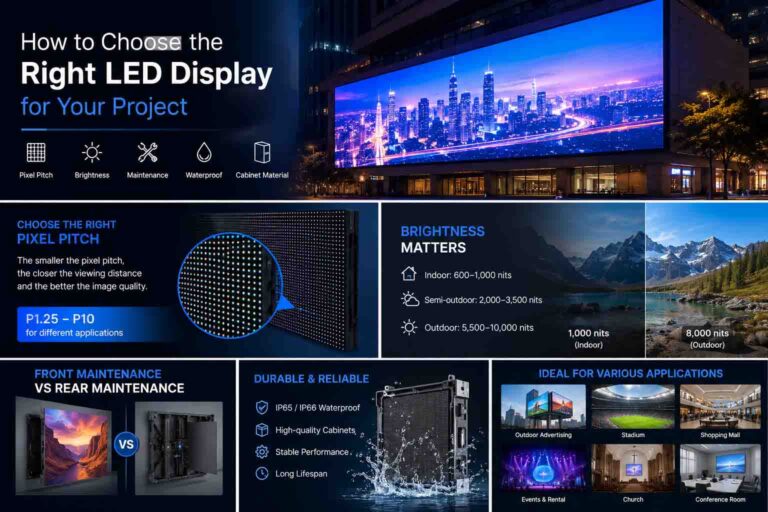
Front Maintenance
Suitable when there is limited space behind the screen.
Rear Maintenance
Suitable when technicians can easily access the back of the LED display.
You should also consider whether LED modules, power supplies, receiving cards, and other components can be replaced easily.
Easy maintenance can help reduce downtime and service costs.
7. Spare Parts and After-Sales Support Matter
A professional LED display supplier should be able to provide replacement parts and technical support.
Common spare parts include:
- LED modules
- Power supplies
- Receiving cards
- Cables
- Connectors
Before ordering, ask about:
- Warranty period
- Spare parts
- Remote technical support
- Replacement procedures
- Software support
A reliable supplier is not only responsible for delivering the screen, but should also provide support after installation.
How Long Can an LED Display Last?
The actual LED screen lifespan depends on many factors, including:
- Component quality
- Operating hours
- Brightness settings
- Temperature
- Humidity
- Power supply
- Maintenance
- Installation environment
Therefore, it is better not to judge the lifespan of an LED display by one number alone.
A properly designed and maintained LED display can provide long-term service, but the actual service life will vary depending on the application and operating conditions.
How to Reduce LED Display Failure Risk?
Before purchasing, ask your supplier these questions:
☐ What LED components are used?
☐ What power supply is used?
☐ Is the screen aging-tested before shipment?
☐ How is heat dissipation handled?
☐ What is the outdoor protection level?
☐ Is front or rear maintenance required?
☐ Are spare parts available?
☐ What is the warranty period?
☐ What technical support is provided?
These questions can help you evaluate LED display reliability before placing an order.
Reliable LED Display Is More Than a Good Specification
A reliable LED screen is not determined by pixel pitch or brightness alone.
It depends on the complete system:
Quality Components + Stable Power + Good Thermal Design + Proper Testing + Easy Maintenance + Professional After-Sales Support
When comparing different LED display suppliers, don’t only compare the price per square meter.
Compare the complete configuration, testing process, warranty, spare parts, and technical support.
The goal is not simply to buy a cheaper LED screen.
The goal is to choose an LED display solution that can operate reliably for your specific project.
Need a Reliable LED Display for Your Project?
If you are planning an indoor or outdoor LED display project, send us your:
- Screen size
- Viewing distance
- Installation environment
- Operating hours
- Application
- Destination country
Our team can help you select the appropriate LED display configuration, cabinet, power system, control system, and maintenance solution for your project.