Outdoor LED Display Screens: The Complete 2026 Buyer’s Guide


Outdoor LED display screens have transformed the way businesses, governments, sports venues, and public organizations communicate with audiences. Traditional printed billboards are gradually being replaced by digital LED displays that offer dynamic content, higher visibility, and greater flexibility.
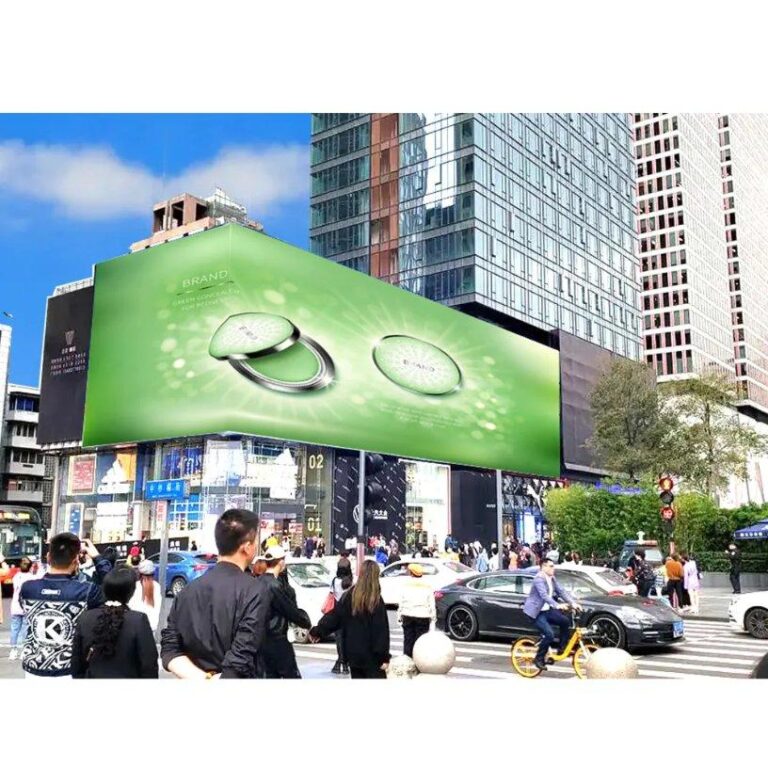
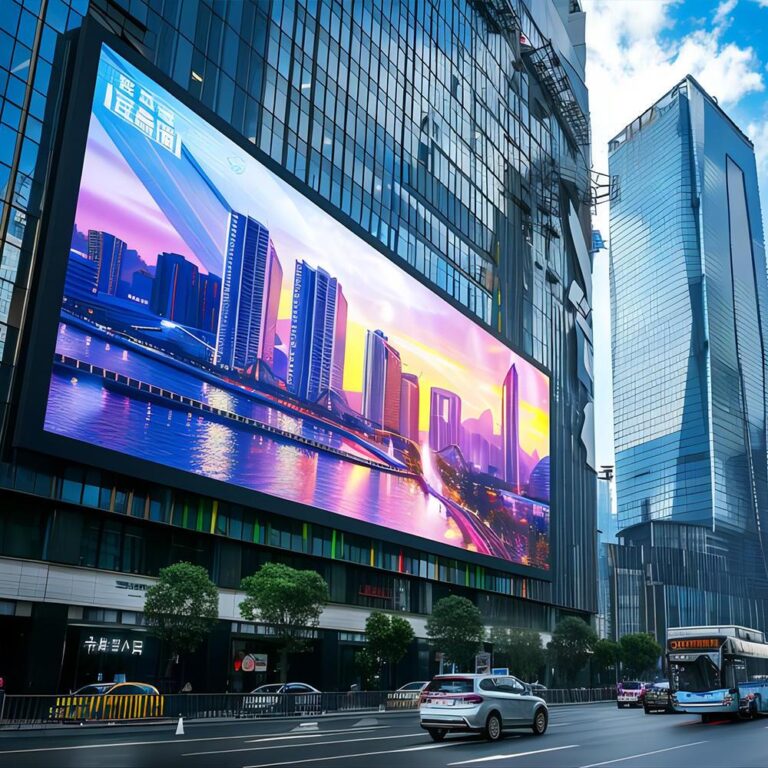
Today, outdoor LED displays can be found everywhere—from city centers and shopping malls to stadiums, transportation hubs, and roadside advertising locations. Their ability to deliver bright, colorful, and engaging content makes them one of the most effective forms of visual communication.
As LED technology continues to advance, buyers are faced with an increasing number of options. Understanding the key factors involved in selecting an outdoor LED display can help ensure the success of your project and maximize your return on investment.
This guide explains everything you need to know about outdoor LED display screens, including technology, specifications, applications, installation, maintenance, and purchasing considerations.
What Is an Outdoor LED Display?
An outdoor LED display is a large digital screen made up of numerous LED modules assembled together to create a seamless display surface. Each module contains hundreds or thousands of LEDs that produce light directly, allowing the screen to remain visible even under direct sunlight.
Unlike traditional LCD displays, LED screens do not rely on backlighting. Instead, each LED emits its own light, resulting in higher brightness, better contrast, and superior outdoor visibility.
Outdoor LED displays are designed to withstand harsh environmental conditions, including:
- Rain
- Snow
- Dust
- Wind
- UV exposure
- Extreme temperatures
Most outdoor LED screens feature an IP65 protection rating on the front side, ensuring reliable performance in challenging outdoor environments.
How Outdoor LED Displays Work


LED Modules
LED modules form the display surface. Each module contains LEDs arranged in a precise grid pattern.
Common outdoor pixel pitches include:
- P3
- P4
- P5
- P6
- P8
- P10
The pixel pitch refers to the distance between adjacent pixels. Smaller pixel pitches provide higher resolution and better image quality.
LED Cabinets
LED modules are installed inside cabinets that provide structural support and environmental protection.
Popular cabinet sizes include:
- 960×960mm
- 640×640mm
- 500×1000mm
Power Supplies
Power supplies convert AC power into stable DC voltage required by the LED modules.
Reliable power supplies help ensure:
- Stable brightness
- Long lifespan
- Reduced maintenance costs
Control System
The control system manages content playback and communication between the display and the media source.
Popular control systems used in the LED industry include:
- NovaStar
- Colorlight
- Huidu
These systems allow users to remotely manage content, schedule advertisements, and monitor display performance.
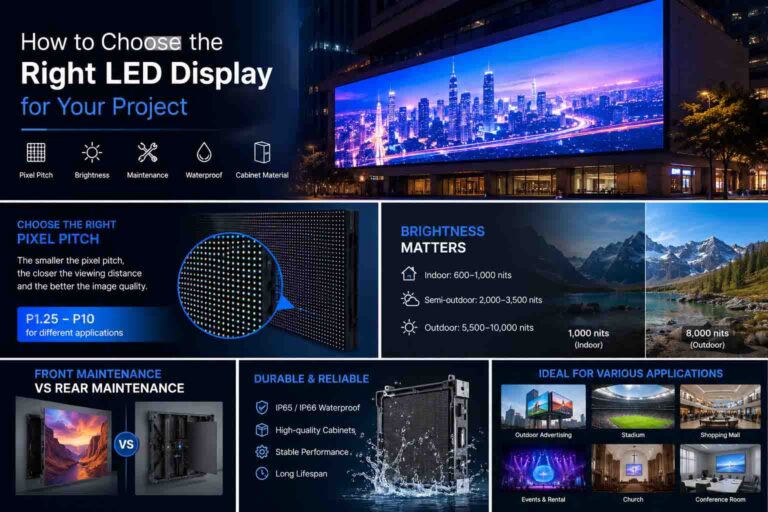
Understanding Pixel Pitch
Pixel pitch is one of the most important specifications when selecting an outdoor LED display.
The pixel pitch indicates the distance between the centers of two neighboring pixels, measured in millimeters.
Generally:
- Smaller pixel pitch = higher resolution
- Higher resolution = shorter viewing distance
- Smaller pixel pitch = higher cost
The following table provides general recommendations:
| Pixel Pitch | Recommended Viewing Distance |
|---|---|
| P3 | 3–15 meters |
| P4 | 4–20 meters |
| P5 | 5–30 meters |
| P6 | 6–40 meters |
| P8 | 8–60 meters |
| P10 | 10–100 meters |
For roadside billboards viewed from a distance, P8 or P10 displays are often sufficient.
For shopping malls and city centers where viewers are closer to the screen, P4 or P5 displays may be more appropriate.
Brightness Requirements for Outdoor LED Displays
Brightness plays a critical role in outdoor visibility.
LED display brightness is measured in nits (cd/m²).
Recommended brightness levels include:
| Application | Brightness |
|---|---|
| Semi-outdoor displays | 4,000–5,000 nits |
| Outdoor advertising | 6,000–8,000 nits |
| Direct sunlight environments | 8,000–10,000 nits |
High brightness ensures content remains visible throughout the day, even under strong sunlight.
Modern outdoor LED displays also feature automatic brightness adjustment systems that optimize visibility while reducing energy consumption during nighttime operation.
Advantages of Outdoor LED Displays
Excellent Visibility
LED displays remain highly visible under direct sunlight due to their high brightness levels.
Dynamic Content
Unlike traditional billboards, LED displays can show:
- Videos
- Animations
- Images
- Real-time information
- Live broadcasts
Remote Content Management
Content can be updated remotely through internet-based control systems.
This reduces operational costs and increases advertising flexibility.
Long Service Life
High-quality outdoor LED displays typically offer a lifespan exceeding 100,000 hours under proper operating conditions.
Energy Efficiency
Modern LED technology consumes significantly less power than previous generations while delivering higher brightness and image quality.
Applications of Outdoor LED Displays
Digital Billboards


Benefits include:
- Multiple advertisers sharing one screen
- Real-time content updates
- Higher advertising revenue
- Better audience engagement
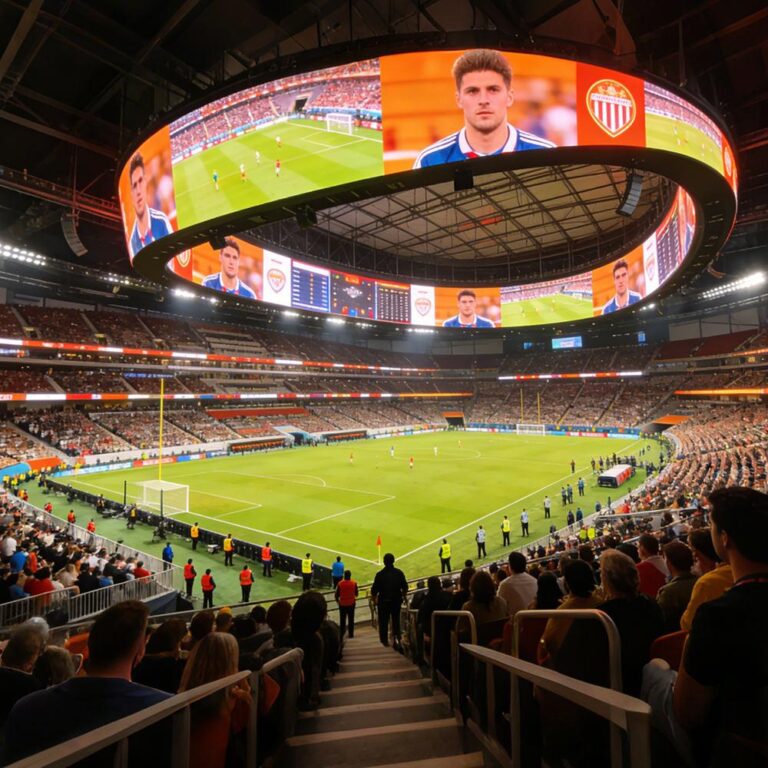
Sports Stadiums
Outdoor LED displays are widely used in sports venues.
Applications include:
- Live event broadcasting
- Scoreboards
- Sponsor advertisements
- Instant replay systems
Sports LED displays must provide excellent visibility from all viewing angles while maintaining reliable performance under varying weather conditions.
Transportation Hubs
Airports, train stations, and bus terminals utilize LED displays to communicate critical information.
Typical content includes:
- Arrival schedules
- Departure schedules
- Gate information
- Emergency notifications
Smart Cities
Many cities use LED displays for public communication.
Examples include:
- Traffic updates
- Weather alerts
- Public announcements
- Emergency information
Installation Methods for Outdoor LED Displays
Several installation methods are commonly used.
Wall-Mounted Installation
Suitable for:
- Shopping centers
- Commercial buildings
- Retail stores
Pole-Mounted Installation
Commonly used for roadside advertising.
Roof-Mounted Installation
Ideal for large-scale commercial advertising projects.
Freestanding Structures
Often used in public squares, sports facilities, and transportation centers.
Proper structural design is essential to ensure wind resistance and long-term safety.
Outdoor LED Display Maintenance
Regular maintenance can significantly extend the lifespan of an LED display.
Cleaning
Dust, dirt, and debris should be removed regularly.
Routine cleaning helps maintain brightness and image quality.
Inspection
Technicians should periodically inspect:
- Power supplies
- Signal cables
- Receiving cards
- LED modules
Waterproof Verification
Outdoor displays should be checked regularly to ensure waterproof seals remain intact.
Water infiltration can damage internal components and increase maintenance costs.
Brightness Calibration
Over time, brightness levels may vary slightly between modules.
Calibration helps maintain image uniformity across the entire screen.
Factors Affecting Outdoor LED Display Pricing
The cost of an outdoor LED display depends on multiple factors.
Pixel Pitch
Smaller pixel pitches require more LEDs and generally cost more.
Screen Size
Larger displays require:
- More LED modules
- More cabinets
- More power supplies
Brightness
Higher brightness displays often use premium LEDs and advanced power management systems.
Installation Structure
Steel support structures can account for a significant portion of total project costs.
Control System
Advanced video processing equipment can increase overall project investment.
How to Choose the Right Outdoor LED Display Supplier
Selecting a reliable supplier is just as important as selecting the display itself.
Consider the following factors:
Manufacturing Experience
Choose manufacturers with extensive experience in LED display production.
Quality Control
Reliable manufacturers perform:
- Aging tests
- Waterproof tests
- Brightness calibration
- Functional testing
Certifications
Look for internationally recognized certifications such as:
- CE
- FCC
- RoHS
Technical Support
Strong after-sales support should include:
- Remote assistance
- Spare parts supply
- Technical documentation
- Installation guidance
Project References
Review previous projects to evaluate manufacturing quality and application experience.
Future Trends in Outdoor LED Displays
The outdoor LED display industry continues to evolve rapidly.
Key trends include:
COB Technology
COB (Chip on Board) technology offers improved durability and better image quality.
Energy-Saving Designs
New power-saving technologies help reduce operating costs while maintaining brightness.
Smart Content Management
Cloud-based platforms allow remote management of large LED display networks.
AI-Powered Advertising
Artificial intelligence enables dynamic advertising based on audience demographics and environmental conditions.
Naked-Eye 3D Displays
Three-dimensional LED displays are becoming increasingly popular in major cities worldwide.
These innovative displays create immersive visual experiences without requiring special glasses.
Conclusion
Outdoor LED display screens have become an essential tool for advertising, information delivery, and audience engagement. Their superior brightness, flexibility, durability, and visual impact make them an ideal solution for a wide range of applications.
Whether you are planning a digital billboard, sports display, transportation information system, or commercial advertising project, understanding key factors such as pixel pitch, brightness, installation requirements, and supplier capabilities is essential for making the right investment.
By choosing a high-quality outdoor LED display and working with an experienced manufacturer, businesses can achieve long-term reliability, lower maintenance costs, and stronger returns on investment.
As LED technology continues to advance, outdoor LED displays will remain at the forefront of digital communication and advertising for years to come.